Saturday, 17 October 2020

What you didn't learn from your stable upbringing

 Are you over the age of 20, with two parents who in some order married, created 1-14 smaller versions of themselves and raised them all in the same house, kept on the same career path, and marked your heights on the doorframe every year to assure you all that only one thing was changing?

What a strange life.

I meet people like you from time to time, and you all have some odd illusion of permanency that I really think would have benefitted from a divorce or two in your formative years.

You have reached adulthood without learning the following things:

  1. Things end
  2. This is okay
  3. Sometimes there's new stuff in their place and sometimes they're just gone; both are acceptable outcomes
  4. Making a decision in your 20s and doggedly sticking with it for the rest of your life is neither sensible nor modern
  5. Stability is useful but not guaranteed
  6. Relatedly, owning a house makes moving house a bloody pain
  7. How to pack boxes so your tiny child arms can lift them
  8. Sometimes it is better to pick up and leave, even if you've spent a long time digging
  9. Love does not lead to significantly better health outcomes than placebo
Please spend time focusing on these lessons, or you will have to spend your 20s learning them the hard way, by making decisions that are neither sensible nor modern. If you need more explaination, ask your nearest child of divorce. We're trying to work out which parent forgot to teach us to bleed a radiator.

Tuesday, 26 November 2019

Stop worrying about tactical voting

It's that time again, where everyone comes out of the woodwork to tell us what the result of the election will be, and, paradoxically, how to vote to change that outcome.

Everyone has a different set of stats - 2017 election data, European election data, opinion polls, sneakily-worded opinion polls... They might mention Left Unity, or warn of the dire consequences of splitting the vote. One Brexit party ad I saw didn't even have statistics, just a gif of a swingometer yeeting Jeremy Corbyn's head out of the frame.

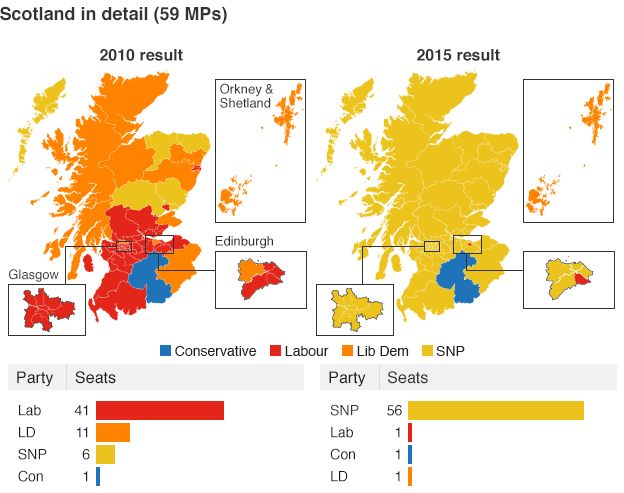
Every time someone brings out whatever stat they're using as tea leaves today, I bring up this result from 2015:
Image: a map showing Scotland's swing from majority Labour to majority SNP in 2015

That's over 50 seats flipping in the space of 5 years. And politics is only getting more volatile. Labour gained over 10,000 votes in some constituencies between 2015 and 2017. The Brexit Party has risen, but UKIP has not been completely replaced. Sure, it's vanishingly unlikely that the Greens will get an all-out majority, but we're pretty much guaranteed an unpredicatable result in at least a few constituencies.

Sometimes a vote for a minority party is a spoiler, sometimes it's the first vote for the revolution. If people always voted for the lesser of two evils, the Labour party wouldn't even exist. If the left had all voted tactically last election, we would have skipped two years of austerity. No-one can guarantee the outcome of any particular action, we all just have to live with a string of imperfect decisions and unpredictable consequences, and decide where our own priorities lie.

In 2015, I was told I was personally responsible for the destruction of the planet because I didnt vote Green. The classic Labour response goes something like this: How dare they put a tiny chance to save lives later above a high chance to save lives now. They were personally responsible for the deaths of disabled people under austerity! In reality, our votes were each less than 0 .01% responsible for the person sitting in one of 650 seats in the election, and there was no "right" choice, just people with similar values but different priorities.

Don't take this to mean voting isn't worth it. Absolutely do vote, please. It's a relatively low effort-to-outcome ratio, the Labour party will get someone to drive you to the polls if you ask nicely, and it has infinitely more impact than not voting. Although, if you want to be responsible for more than 0.000002% of the result, joining a party and campaigning is a great way to multiply your impact.

I want you to vote Labour next election. Not because we're not the other guys, but because this manifesto is an absolute cracker. Because even if your local candidate is a bit shit, you can get involved and get them to shape up, and meanwhile they'll be whipped to deliver 30 million trees, free broadband, nationalised rail and a national education service. Because this time next year my party will have sent a motion to conference to build on this manifesto and make Labour policy even more ambitious.

But if you vote for another party with similar values? That's fine. I'll see you on the front lines after the election - because left unity is fighting to protect ourselves and those more vulnerable than us from cuts to services, from changing climates, from corporate greed, from hate crimes, from the erosion of our mental health. And no single protest, or food bank donation, or call to a depressed friend will guarantee even 0.000002% of the future will be better - but all those actions together can build a better world.

Wednesday, 15 May 2019

The Useful Approaches to Climate Change

I initially tried to record this as a podcast but the audio got deleted, so be eternally grateful you didn't hear my weird child voice trying to do a Radio 4 impression.

Essentially, there are 2 useful approaches to climate change:

  1. Trying to do something about it
  2. Partying while the world ends
You can mix and match these approaches as you wish:
  • Go vegan during the week and hold fondue parties on the weekend
  • Alternate writing letters to your MP with writing erotic fanfiction
  • Stop flying and unicycle to Switzerland
I don't actually know what the most effective way to fight climate change is. I hear going vegan and not flying are the biggest impacts you can have with your lifestyle, and the rest is legislation. Exactly what legislation we need is hotly debated and to be honest you can hotly debate it somewhere else, because what I'm driving at here is: do something, or make the most of doing nothing.

Because the least helpful response is to lie in bed knowing that the world is on fire, and neither enjoying yourself nor doing anything useful. And I say this as someone who just lay in bed not doing anything useful (including resting) for the past 3 hours, because I'd already almost fallen asleep at work. I have now eaten some cereal, which is not a perfect solution but did provide me with enough energy to write a blog post, after which I will change into my pyjamas and let a lovely Irish doctor tell me that I'm in lovely calming place where all I need to do is heal.

Yes, the seas will rise at 2 degrees. And yes, we might be too late to stop ourselves getting there. But limiting ourselves to 3 degrees is better than spiralling into tropical dinosaur hell.

And really, even if we do go full Jurassic (@ me, paleontologists), we can only do so much damage. Extinction events happen regularly, and crocodiles and cyanobacteria don't really give a shit about them. And once the human population dwindles, we'll stop burning as much stuff.

That is the pessimist's view, of course. I like to take the optimist view, which is that the ozone layer fixed itself and the carbon levels can too, so long as we occasionally remind politicians that we don't want cornwall to become the next Atlantis.

I'm now very tired, so I will end this blog post and hit send. Now I've tried to help, I'm going to have a little nap, because that is how grown-ups party.

Thursday, 9 May 2019

Abortion is murder but it's still okay

I've been meaning to write this for a while but it looks like the US is tightening abortion laws again so this is topical.

Whenever the abortion debate comes up, I hear people some people talking about murder, and others talking about healthcare. And that makes sense. We on the pro choice side would like to convince people to support abortion access, and people are largely for some access to healthcare. Abortion is provided by healthcare providers, and is sometimes medically necessary. We also talk about "bodily autonomy", as if there was only one body involved.

But I'd be lying if I said I didn't think we were also trying to make ourselves comfortable.

I will tell you two (very short) stories.

A few years ago, my ancient cat developed lymphoma. There is no remission from lymphoma, especially when it's spread as far as hers had. Even chemotherapy is used to give a few extra months, not to achieve a healthy outcome. I loved this cat more than I have ever loved anything. My heart still bursts thinking about her. A few months after diagnosis, she had almost stopped eating entirely. I took her to the vet, and they weighed her to be 1.5kg. She should have been 4kg. They offered to put her down then and there, but I asked to bring her back, still believing there was some hope. That night she fell down the stairs in confusion. She didn't seem to recognise me. She was clearly suffering. A clarity came over me. I called, crying, and asked to schedule an appointment for the next day. To murder my cat.

A few months ago, I had a pregnancy scare. I was only a few days late, and I had used protection, but given I also had a UTI it was not unlikely that there were other unwelcome guests in my tracts. Again, a clarity came over me. I have Chronic Fatigue Syndrome that is not yet properly controlled. There is no way I could bring a child into this world and care for it without making us both miserable. For that matter, there was no way I could be pregnant without it taking a serious toll on my health. My thoughts, as I summarised them to a friend later? "Sorry, baby, but you're going to have to die."

Murder is often legal. Murder is often morally acceptable. Or if the definition of murder is specifically immoral killing of a human being, killing is still both of those things. "Thou shalt not kill" has never been a possible commandment to follow.

I indirectly kill all the time. I no longer eat meat, but my egg consumption grinds baby chicks, my medicine has been tested on animals, and my taxes go to the military. I give money to people who ask without checking whether it will go on a potentially lethal drug habit. I kill directly whenever I manage to squash a wasp.

Abortion is a necessity. Freely available abortion is a necessity. Ending the life of a foetus with little nervous system or capacity for emotion in order to not go through pregnancy or birth is much more morally acceptable than killing an animal to have a tastier meal. Way more acceptable than "collateral damage" casualties who will leave behind whole mourning families. If you're pro-life, perhaps these are some places to start before you come for abortion.

I wasn't actually pregnant, it turns out, which was convenient as I was 200 miles from my doctor. And you might be thinking that I would have had a "good reason" to end my pregnancy. But my reason is no better or worse than anyone else's. Pregnancy is tough on any body. You're growing a whole new person in a way that's been developed by trial and error. "I don't want to be pregnant" is a good enough reason from a moral standpoint.

If we don't talk about abortion like it's the same as taking some Nyquil, then we can do a lot of good. I spent many of my teenage and adult years thinking abortion was a simple procedure. That if I got pregnant I could just take a pill, have a heavy period and then forget about it. It was not until I read about the move to take the second abortion pill at home that it clicked that abortion has the same effects as miscarriage. I am now, as a result, much more careful with my birth control and much more unlikely to have an abortion.

If we admit that, yes, we are killing what might be a person, then we can have a debate where we're talking about the same thing. If we insist that we're doing healthcare for our own body, people's entire position starts to hinge on the thorny metaphysical issue of personhood, and quite frankly most people don't have the time or energy to detangle these things.

The one downside is that we have to accept some nuance. We have to accept that something can cause harm and still be the best thing to do at the time. This is hard, and it's why I so often get rejected with "I'm really busy right now", when the more immediately harmful but ultimately better option would be to say "I'm not interested in you". However, I think this kind of moral nuance is not actually optional, so long as you're discussing in good faith.

If you're about to ask whether I agree with this article about "post-birth abortion", I actually think that when the foetus is viable (24 weeks+), then there are enough alternative options that abortion is unnecessary. Adoptable babies are sought-after. You're over halfway through the pregnancy anyway. If you're going to get the baby out it might as well be in one piece. But I'm not entirely convinced on this and willing to hear arguments for abortion past 24 weeks.

Abortion: it should be completely legal and easy to access, because death is inevitable and often better than suffering.

Wednesday, 20 February 2019

We shouldn't strip people of their citizenship, even if they have a spare

Just a quick one. My views on the revocation of the citizenship of Shamima Begum (the "ISIS teen" or "ISIS bride"*) are very simple: it should not have happened.

In fact, we should not strip anyone of their citizenship.

Currently, the UK government can only remove citizenship from a person if it would not make them stateless. This means that the only people who can have their citizenship revoked are dual citizens. Which means that the law is not applied consistently.

A foundational principle of modern democracy is that the law is applied consistently to everyone. If two people commit the same crime in the same circumstances, they should receive the same sentence. In principle, your wealth, social status, gender, ethnicity, membership of the ruling body or number of collectible beanie babies will not affect what consequences you experience for breaking the law.** In practice, of course, most of these things will absolutely affect the consequences you experience. However, this happens because they affect the human elements of the system - eliciting more or less sympathy in a judge or jury, or allowing you to acquire a more persuasive lawyer. And we try our hardest to eliminate these inequalities with careful jury selection and the provision of legal aid.

But here, the inequality is written into the law. People with single citizenship can never be stripped of their UK citizenship, but those with dual citizenship can be. So two people could commit exactly the same crime, but one would no longer be a citizen as a result.

But what should we do with dangerous people? People who join terrorist organisations and are a threat to national security? Well, there must be a process, because there must be some way that we deal with homegrown terrorists. So we should simply apply this to everyone, regardless of other citizenships (and certainly not without determining whether they have another citizenship at all).

And of course, we should not forget that dual nationality is wrapped up with ethnicity, and that anything that disproportionately affects dual citizens will, of course, disproportionately affect people of minority races and ethnicities.

One objection you may have is that by the same token, presumably we should treat non-citizens in the same way as citizens, which would mean we couldn't deport foreign criminals. Now, I think this is a perfectly reasonable stance, and that we should find a way to make things work without telling people they're not allowed on this bit of damp land just because they weren't born nearby. However, it is a fact that under the current system, it is generally agreed that governments get to treat citizens and non-citizens differently.*** This is why making someone stateless is unacceptable - being part of a state affords you protection. Thus, we can decide not to revoke the citizenship of dual citizens without stepping on to a slippery slope where we're never allowed to deport anyone (as much as I personally would prefer it).

In this particular case, if Shamima Begum is unable to return to the UK, what does this mean for national security? She will not be able to live openly in the UK, but she could return secretly (people from Syria do occasionally enter the UK without going through a border control, after all). If her whereabouts were known, anyone she attempted to recruit could be surveilled. If her whereabouts are unknown, and she is able to use the narrative that her own country rejected her because of her beliefs, I'm sure she could recruit many more people. And what of other UK citizens who are in the same situation? If they legitmately fear that they will be exiled by their home country, they have more motivation to stay with the group that recruited them. I'm sure no-one believes that militant groups will completely disappear from

Or another possible situation is that she might rejoin her family, raise her child, not make any plots or do any recruiting (or have all her attempts thwarted due to the fact that her location will be known), and eventually grow up and realising that running away at 15 to join a terrorist organisation was not actually a good move.

But all this is speculation. Really, the compelling argument is that the UK, as a democracy, is meant to hold equality under the law as paramount. Our votes count the same, and so do our crimes. Citizenship, once granted, should never be revoked.

There's a reason we left exile behind in the last millenium. Let's not let fear tempt us into bringing it back.


*as far as I can tell she married at 15, which makes her a child bride as defined by UNICEF, and referring to child marriages as if they were legitimate is unethical. it is the name given in some news articles, which is why I refer to it here
**in fact, these things shouldn't affect what you're allowed to do under the law at all, including whether you can engage in a legal process. turns out gay marriage is part of the foundations of democracy.
*** the other, more logical, criterion to treat people differently under the law is capacity for understanding, which is why we have age limits and power of attorney.

Tuesday, 20 February 2018

Not Going To Work Today

I'm not going to work today. I might not, in fact, go to work for the rest of the week. And yet, instead of being curled up in bed cursing the world, I'm using some of my energy to write a blog post.

Energy that could go on work.

On a logical level, this makes sense. Even if I could use some of my energy on work today, if that would leave me unable to carry out all the other tasks I need to do to keep functioning, then I actually do not have the energy to work. But it's very hard to drown out the overwhelming narrative that work should be the last thing to go.

Even my helpful CFS leaflets assume this. "You've probably given up fun things to focus on productive things" they say, but in fact I just belligerently do the fun things and then force myself to do the productive things because doing the fun things at the expense of the productive things would be wrong. And then I panic that if I admit that I have a life outside of work to my boss, he will secretly think "could she not be working full time instead of going out gallivanting with her friends?" and then some sort of consequence will come from that but I don't know what, because the one time I got to the disciplinary hearing stage it came completely out of the blue.

So I'm writing this, because I think a lot of other people feel a sense of panic when they're in that stage where they can't reasonably drag themselves into work for a full day, but they can do the washing up or write a small unedited blog post or go through a mental health workbook. Especially because nobody else seems to do this. Everyone else in my office drags themselves in, and even on sick days any small amount of energy they can muster goes on answering emails. But I suppose I've been neglecting the fact that they don't have a chronic illness, and if they don't do their washing for a few days they can reasonably expect to catch up, whereas I can easily find myself too tired to hang out clothes.

Hopefully my unedited and rambly thoughts will convince people that it's okay to use sick time to do life admin (and maybe watch some Netflix). And for the love of god, if you are usually healthy, use your fucking sick time when you need it. Think of it as a contribution to the mental health of the chronically ill.

Sunday, 14 January 2018

Why Trans Women Should Be Included in All-Women Shortlists

First off, I should note that I am cisgender (they put "female" on my birth certificate and I'm completely fine with that), so I may have got some things specifically about trans women's experience wrong, and I'm happy to make edits if . Secondly, the overarching theme of the argument is that trans women are women, but I hope that going into more detail about experiences of sexism will help to clarify this.

There's currently a fundraiser going round with the aim of keeping trans women out of all-woman shortlists and women's officer positions in the Labour Party on the grounds that they don't experience sex discrimination. I'm not going to link to it and I would ask people not to link to it in the comments, please, since I'm not going to funnel people to a fundraiser I disagree with.

Trans women do experience sexism, and many have firsthand knowledge of just how differently men and women (or people who are perceived to be men/women) are treated. While there are some forms of sex (/gender) discrimination in childhood that many trans women don't experience, I never experienced most of them either! I grew up in a feminist household and went to an all-girls school run by feminists, and was never discouraged from science, told to be quiet, or told that my only worth was in my appearance. And I have no experience with childbearing & child care, which I'm sure you'll all agree is a major factor in women's political involvement. And yet I am welcome in women's positions and all-women's shortlists.

Some may argue that someone who has only recently started to experience sexism firsthand may not be right for e.g. a women's officer role, but quite frankly this also applies to certain people who might be applying for LGBT-only positions. We can't ban bi people with opposite-sex partners and supportive families from those positions, even if we may not have lots of firsthand experience with homophobia, and any suggestion to do that would be treated as ridiculous. Banning all trans women from being counted as women by the Labour party is far too harsh a measure to counter this unlikely and mild problem.

Could an unscrupulous man sneak in to a woman's position if we allow self-identification? He could try, certainly, just as right now a straight cis (non-trans) person could try to infiltrate an LGBT position by claiming to be bi. But firstly, he'd be opening himself up to being treated as a masculine trans woman, which is not a fun time, and secondly, I'm fairly sure most selection committees and voters would be smart enough to filter him out. There is a grey area here - if you're a feminine non-binary (neither male nor female) person with "male" on your passport, when do you count as a woman for equality purposes? But as with all grey areas, the approach should be to deal with these on a case-by-case basis, not draw the line in completely the wrong place just in case someone accidentally gets over it when they shouldn't have.

It also strikes me as patently ridiculous that one friend, who has a bushy beard and recently-installed penis, would be classified as a "woman" by this metric, whereas another who has a classically female hormone profile and hasn't been mistaken for a man in 5 years, would not.

Please do let me know if I'm mistaken about anything I haven't personally experienced, or if there's something I haven't addressed.